

Candidate Statement: Daisy Goebel (she/her)
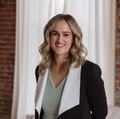
Daisy Goebel (she/her)
I am a lifelong Oregonian, and I previously worked as a City, County, and Private sector planner before opening my business in 2025 as a land use and policy consultant. I am AICP certified, and I have served as both a City and County planning commissioner. I am what's known as a platypus; I have a Bachelor's degree in Planning, Public Policy, and Management from the University of Oregon (go Ducks!) and I am pursuing an Executive Master of Public Policy from OSU (go Beavs!).
My work includes many different areas of land use in both Eastern and Western Oregon, and I am passionate about bridging the Urban-Rural divide when it comes to planning throughout our state. As a board member, my focus will be on listening to many different voices and prioritizing the areas where OAPA can make the biggest impact. Diversity is our biggest strength, and I am committed to learning from and balancing the viewpoints of planners from different regions, different backgrounds, different sectors, and different generations. I am passionate about our beautiful state and I believe in planning as a way to preserve the things that make Oregon so special. Our beaches, forests, farmland, and public spaces are a big part of that, but the most special element of our state is the people who call Oregon home.
Additional Information:
My diverse land use experience has shown me the importance of local empowerment in the land use process. Oregon is facing many complex land use challenges, including housing, industrial development, public service and transportation needs, and environmental protection. The solutions to these problems don't always look the same in every region of the state, and localities are often best positioned to approach complex issues in a way that makes the most sense within their local community.
Planning to me is like putting together a puzzle. Successful planners must bring together many different pieces that may not look compatible at first glance (comprehensive plans, codes and standards, public testimony, environmental impacts, development priorities, design elements, etc.) We must then bring them into cohesion to the best of our ability, ultimately creating a picture that is bigger than the sum of its parts.